

Using a space heater in an RV is the subject of debate among those who enjoy the RV life. Generally, using a small space heater is safe as long as you follow all the safety precautions. But before you bring a space heater on your next winter camping trip, it’s important to understand their risks and how to operate them safely.
This post has all the tips you need to know about staying safe when using portable space heaters in your RV.
What Is an RV Space Heater?

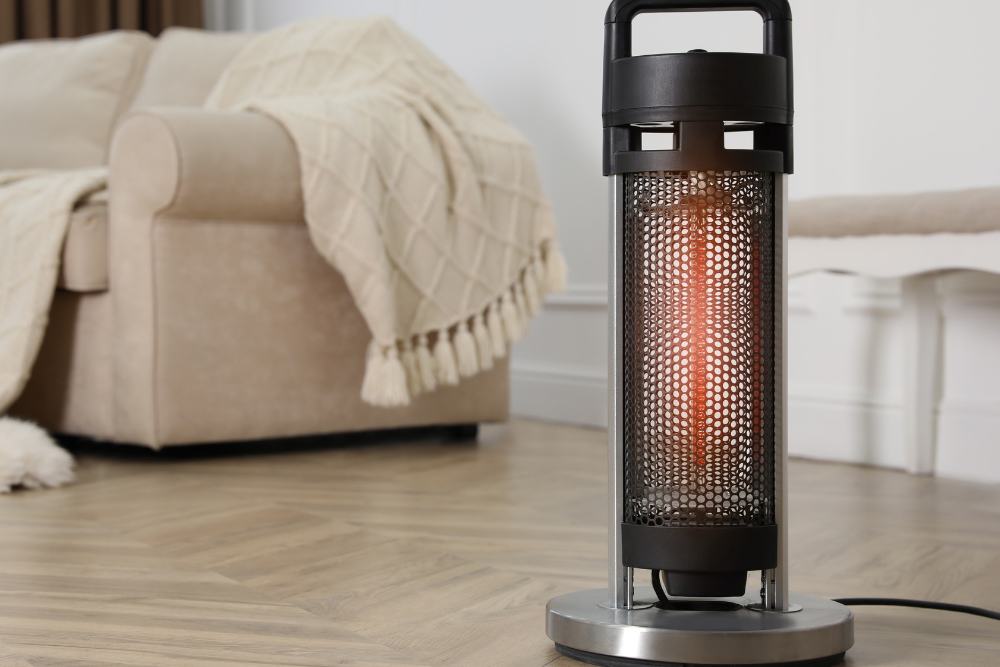
A space heater is a portable device used to heat a small to medium-sized area that’s enclosed. This makes it perfect for indoor use when heating RVs, small offices, and individual rooms in your house. Typically, these devices require electricity, but some have their own power supply. There are two types of electric space heaters:
Convection Heater – Also known as a ceramic heater, convection heaters use a fan to blow air into a chamber that warms the air and then circulates the heated air back into the room, gradually raising the room’s temperature.
Radiant Heater – This portable heater generates heat internally and radiates it to nearby persons and objects. While they’ll keep anyone in front of the heater warm, they aren’t very effective at raising the air temperature in a room.
Benefits of Using an Electric Space Heater in an RV
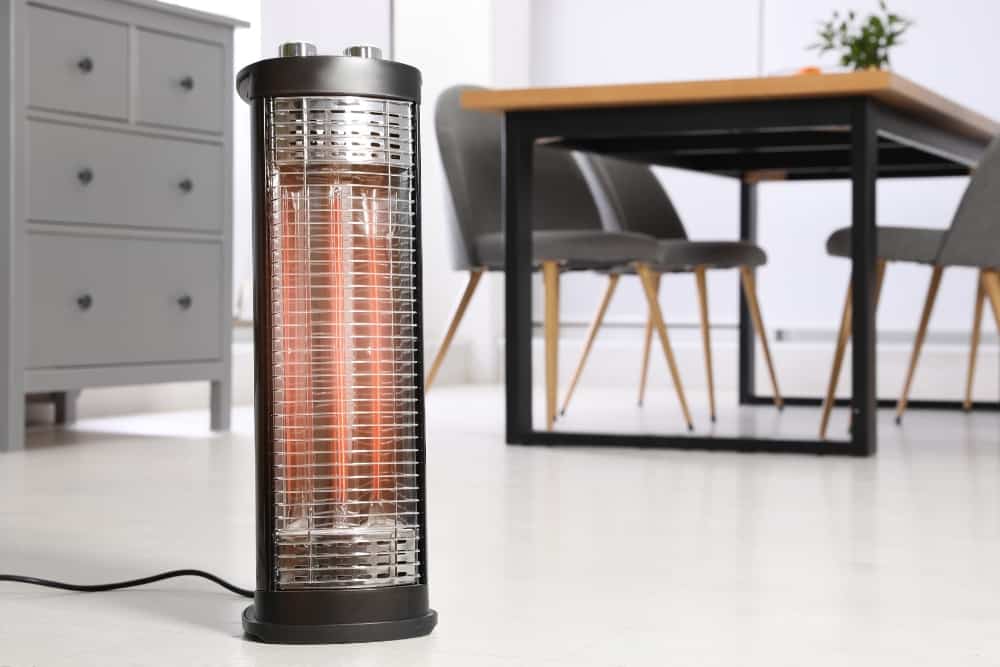
Space heaters are typically used in a travel trailer or other RV when the main heating system (furnace) is unavailable, inadequate, or too costly to operate. Here are some pros of using a convection or radiant heater as a heat source:
They are portable, allowing you to place them where you need warmth most.
Running an electric space heater in an RV will be cost-free when on unmetered shore power. For propane, you have to pay for it separately.
They serve as an excellent backup heating source if the propane runs out or the RV furnace develops an issue.
They are inexpensive to purchase.
They are super easy to operate — plug them directly into the electrical outlet.
They run quieter than a propane furnace.
The latest options have sensors that automatically turn the heat off when the room reaches the desired temperature or after a pre-designated time has passed.
Some automatically shut off when there is danger, i.e., when they tip over or are too close to objects.
Dangers of Space Heaters
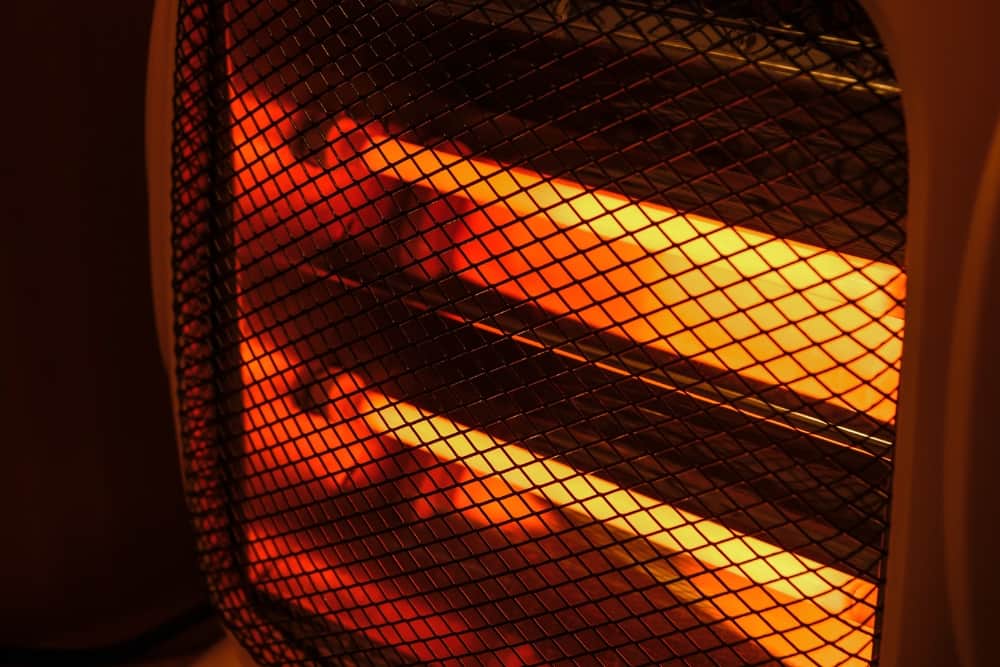
While handy, using a space heater in the RV poses several risks. They include:
They are a fire hazard. Each year, space heaters are responsible for about 20,000 fires and 300 deaths.
Taller models can easily tip over and start a fire if placed on an uneven surface.
They may start a fire if placed near flammable material, such as carpets, curtains, clothes, upholstered furniture, or bedding.
Some parts of the heater become super hot and can cause burns when touched accidentally. This is a huge risk for kids and pets.
They can cause electric shock when they are handled with wet hands.
Some models use a lot of electricity and can easily overload circuits, causing power failure in your RV or even a fire.
Non-electric models can cause carbon monoxide poisoning. It’s important to make sure you have carbon monoxide detectors in your RV.
Space Heater Safety Tips
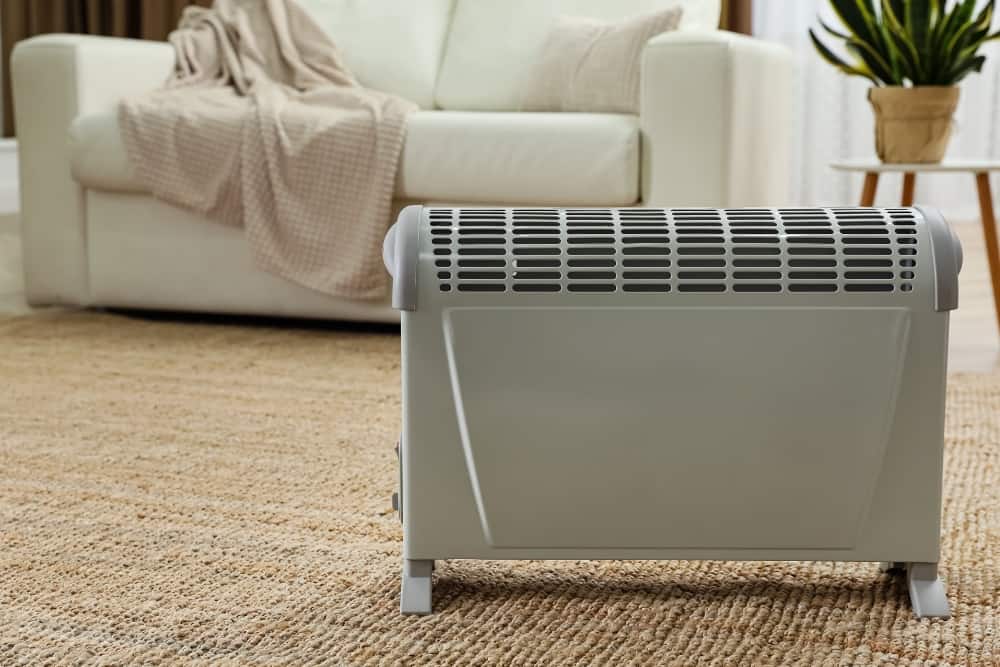
Now that you know space heaters can be hazardous if not used properly, it’s time to look at how to keep your loved ones and your RV safe. The following are tips from the National Fire Protection Association. We will also highlight some features to look for when shopping for the best electric space heater:
Place the Space Heater at Least 3 Feet Away From Flammable Objects
Running space heaters too close to combustible items is the leading reason they start fires. Ensure the space heater is not near rugs, carpets, sofas, and bedding. Place it on a hard, level, stable, and non-flammable surface.
Never Leave the Heater Unattended
Don’t leave the space heater running while asleep or out of the camper. A unit with a built-in timer may help minimize the chance of the heater running unattended for long periods. Set it to shut off automatically after an hour.
Keep It Out of Reach of Children and Pets
Place the heater on a flat, elevated surface where kids can’t reach it to prevent burns and fire accidents. It should also have a guard around the heating element.
Don’t Place It in the RV Basement
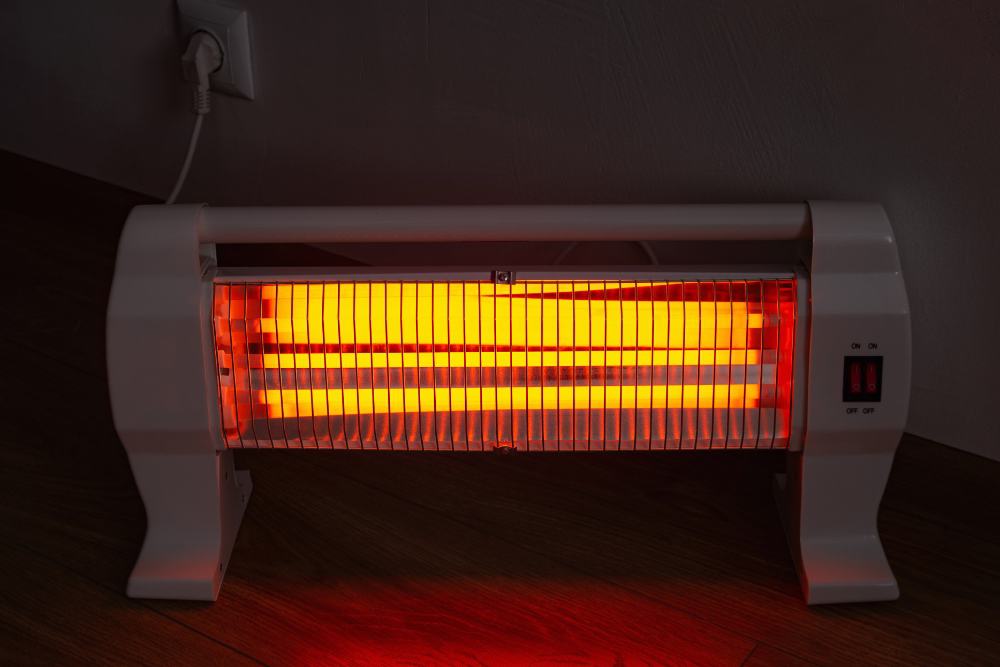
While it seems like a good idea, never place the heater in the RV storage bays or under the skirting to heat the underbelly. That’s because an unsupervised heater is a fire hazard.
Buy an Electric Model
The best space heater for an RV is one that’s electric. Avoid space heaters that burn combustible fuel like propane, natural gas, or kerosene, as they can deplete oxygen and cause carbon monoxide poisoning. That means a portable propane heater is a no-no.
Be Mindful About Creating a Tripping Hazard
Ensure the heater’s cord isn’t lying across high-traffic areas, creating trip hazards. Tripping on the cable can also cause the unit to tip over.
Get a Model With Tip-Over Protection
When looking for the best electric RV heater, look for one with built-in safety features, such as an automatic shutoff feature, which automatically shuts the unit down if it deviates from its normal upright position.
Consider a Unit With an Adjustable Thermostat
These space heaters monitor and balance room temperature by automatically turning the unit off and on. It should also have various heat settings.
Buy a Quality Brand
Invest in a trusted name brand to ensure safety and quality. Preferably, it should carry a safety certification label from an independent testing organization.
Keep Away from Water
Position the unit away from places where water may contact the device. That includes the kitchen, bathroom, sinks, windows, and doors where water may enter outside.
Test Your Smoke and Carbon Monoxide Alarm
Frequently inspect these safety devices to ensure they will alert you of the first signs of a potential fire.
Proper Grip
The best space heaters have a good carrying handle or comfortable grip. It will help you carry the unit even when it’s hot or sit it up when it overturns without risking burns.
Choose a Unit with a Long, Sturdy Cord
This will give you flexibility in positioning it and preventing overheating of the nearby walls. Don’t bend the cord or run it under rugs or carpeting to prevent overheating. Also, inspect it often to make sure it’s not frayed or damaged.
Plug into a Wall Outlet
Never plug into a surge protector, power strip, extension cord, plug timer, or anything that’s not a wall outlet. Such connections increase your chances of overloading the circuit, which can result in a fire.
Replace Old and Problematic Heaters
The safest space heater is one that’s in good working condition. If your portable space heater is old or has frayed cords or any physical damage, invest in a new model with the latest safety features. Some newer options can connect to WiFi and mobile apps to enable remote control. Others also offer real-time reports on air quality, temperature, and humidity.
Consider a Heat Pump
Concerned RV owners with young kids and pets can opt for a roof air conditioner with a heat pump. It uses electricity rather than propane, making it a good option for warming up the camper’s interior in cold weather.
So, Can I Use a Space Heater in a Camper?
Yes, space heaters can be safe, affordable, and effective at keeping an RV’s interior toasty warm during the chilly months. Of course, you’ll want to invest in the right heater, position it in the right place, and keep an eye on it to avoid costly accidents.
FAQs
Here are answers to popular questions about space heaters and RVs.
What are the best space heaters for an RV?
The best space heaters for an RV are electric heaters.
Can you use an electric space heater in a pop-up camper?
It’s possible to use an electric space heater in a pop-up camper. However, you need to follow all recommended safety precautions when doing so, including keeping the heater at least three feet away from anything that’s flammable, plugging it directly into a wall outlet, and not leaving it unattended at any time.
More From RV Top Tips


Cynthia Measom is the founder and main content creator of RV Top Tips. Not just a writer, she’s a dedicated RV owner and enthusiast, alongside her husband, Joe, who is an experienced RV tech. With their joint knowledge, the two are up on the latest trends and technologies in the RV industry, as well as practical camping and lifestyle tips.
The couple own a 2020 Coachmen Chaparral fifth-wheel that they absolutely love. Their secret to being so satisfied? They purchased the model after a solid year of researching different fifth-wheel campers in person and online to find the perfect fit for their family of three.
- Cynthia Measomhttps://rvtoptips.com/author/admin_rvtoptips/

- Cynthia Measomhttps://rvtoptips.com/author/admin_rvtoptips/
- Cynthia Measomhttps://rvtoptips.com/author/admin_rvtoptips/
- Cynthia Measomhttps://rvtoptips.com/author/admin_rvtoptips/


